
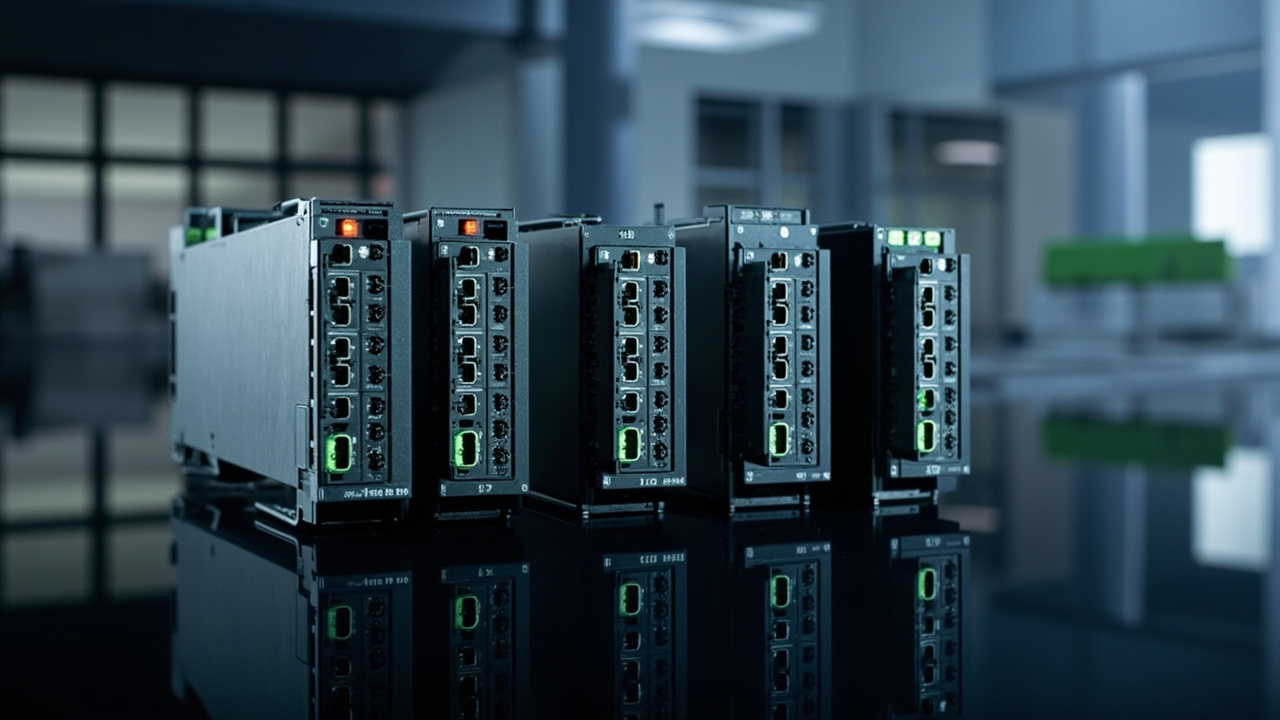
PLC Automation Suppliers: Key Differences Between Major Brands
Explore the key differences between major PLC automation suppliers like Siemens, Rockwell Automation, Schneider Electric, and Mitsubishi Electric. This guide helps you navigate features, applications, and support for your industrial automation needs.
In the dynamic world of industrial automation, Programmable Logic Controllers (PLCs) are the brains behind countless operations, from manufacturing lines to complex process control systems. Choosing the right PLC automation supplier is a critical decision that impacts system performance, scalability, integration, and long-term support. With a multitude of reputable brands in the market, each offering unique strengths and specializations, understanding the key differences is essential for making an informed choice.
At Valley International Supply, we’ve spent decades partnering with leading manufacturers and serving as a trusted distributor and OEM representative. Our technical expertise allows us to see firsthand how various PLC systems perform in real-world industrial environments. This guide aims to demystify the landscape of major PLC automation suppliers, helping you navigate their core offerings, typical applications, and what sets them apart.
Understanding Your Needs Before Choosing a PLC Supplier
Before diving into specific brands, it’s crucial to define your project’s requirements. Consider the following:
- Application Complexity: Are you automating a simple machine or a large-scale, integrated plant?
- I/O Count and Type: How many inputs/outputs do you need? Are they digital, analog, high-speed, or specialized?
- Processing Power and Speed: What are the real-time performance requirements of your application?
- Networking and Communication: What communication protocols (Ethernet/IP, PROFINET, Modbus, OPC UA) are essential for integration with other systems?
- Safety Requirements: Does your application require integrated safety functions (SIL, PL ratings)?
- Software and Programming Environment: What is your team’s familiarity with different programming languages (Ladder Logic, Structured Text, Function Block Diagram) and development environments?
- Scalability: Do you anticipate future expansion or modifications to the system?
- Budget: What are your cost constraints for hardware, software, and engineering?
- Support and Service: What level of local support, training, and spare parts availability do you require?
- Legacy Systems: Are you integrating with existing equipment from a particular vendor?
Answering these questions will provide a framework for evaluating the major players in the PLC market.
Leading PLC Automation Suppliers: A Comparative Overview
While many excellent PLC manufacturers exist, a few dominant players consistently stand out for their comprehensive product portfolios, global reach, and technological innovation. Let’s explore the key characteristics of some of these industry giants.
1. Siemens (SIMATIC)
Overview: Siemens is a global powerhouse in industrial automation, known for its robust and highly integrated SIMATIC product family. They offer a vast range of PLCs, from compact micro-PLCs to powerful, fault-tolerant controllers for large-scale applications. Siemens is particularly strong in Europe and has a significant presence worldwide.
Key Strengths:
- Integrated Automation (TIA Portal): Siemens’ Totally Integrated Automation (TIA) Portal is a unified engineering framework that integrates PLCs, HMIs, drives, and other automation components. This streamlines development, diagnostics, and maintenance.
- Scalability: SIMATIC controllers (S7-1200, S7-1500, S7-300/400) offer a wide range of performance and I/O options, catering to diverse application sizes.
- PROFINET Communication: Siemens is a strong proponent of PROFINET, their industrial Ethernet standard, offering high-speed and deterministic communication.
- Process Control Expertise: Widely used in process industries (chemical, pharmaceutical, oil & gas) due to their robust design and advanced control capabilities.
- Safety Integrated: Offers comprehensive safety solutions integrated directly into their PLC platforms.
- Global Support: Extensive global network for sales, service, and training.
Typical Applications:
- Automotive manufacturing
- Food and beverage processing
- Chemical and pharmaceutical plants
- Water and wastewater treatment
- Machine building (OEMs)
- Large-scale infrastructure projects
Considerations:
- Can have a higher initial cost for hardware and software licenses.
- The TIA Portal, while powerful, has a learning curve for new users.
- Strong ecosystem, but integration with non-Siemens components might require more effort.
2. Rockwell Automation (Allen-Bradley)
Overview: Rockwell Automation, through its Allen-Bradley brand, is a dominant force in North America and has a strong global presence. They are renowned for their robust, reliable, and user-friendly control systems, particularly in discrete manufacturing.
Key Strengths:
- Logix Platform (ControlLogix, CompactLogix): A highly scalable and powerful platform that uses a common programming environment (Studio 5000 Logix Designer) across different controller families. This simplifies programming and maintenance.
- EtherNet/IP: Rockwell Automation is a key developer and promoter of EtherNet/IP, a widely adopted industrial Ethernet protocol, offering seamless integration with their drives, HMIs, and other devices.
- Ease of Use (for some): Many engineers find the Studio 5000 environment intuitive, especially for discrete control applications.
- Robust Hardware: Allen-Bradley hardware is known for its durability and reliability in harsh industrial environments.
- Strong Ecosystem: A vast network of integrators, distributors, and support services, particularly in North America.
- Integrated Safety: Offers integrated safety controllers and modules for various safety applications.
Typical Applications:
- Automotive assembly
- Packaging machinery
- Material handling and logistics
- Food and beverage processing
- Discrete manufacturing
- Oil and gas (upstream/midstream)
Considerations:
- Often perceived as having a higher total cost of ownership, especially for software and licensing.
- While powerful, the Logix platform can be complex for very small, simple applications.
- Stronger in discrete control; while capable in process, some users prefer other vendors for highly complex process applications.
3. Schneider Electric (Modicon)
Overview: Schneider Electric, with its Modicon line of PLCs, offers a comprehensive range of automation solutions, from compact controllers to high-performance platforms. They are known for their focus on energy management, sustainability, and open communication standards.
Key Strengths:
- EcoStruxure Architecture: Schneider Electric’s IoT-enabled, open, and interoperable system architecture for buildings, data centers, infrastructure, and industries. This promotes connectivity and data analytics.
- Open Standards: Strong support for open communication protocols like Modbus TCP/IP and OPC UA, facilitating integration with third-party systems.
- Scalability: Modicon controllers (M2xx, M340, M580) cover a wide range of performance needs, with the M580 being a powerful ePAC (Ethernet Programmable Automation Controller) for process and hybrid applications.
- Cybersecurity Focus: Emphasizes cybersecurity features within their automation platforms.
- Energy Management: Strong integration with energy monitoring and management solutions, aligning with their broader company focus.
- Process and Hybrid Control: The Modicon M580 is particularly well-suited for demanding process and hybrid applications, offering high availability and embedded cybersecurity.
Typical Applications:
- Building automation and smart infrastructure
- Water and wastewater management
- Mining, minerals, and metals
- Food and beverage
- Machine control
- Power generation and distribution
Considerations:
- While global, their market share can vary significantly by region.
- The breadth of their offerings can sometimes make product selection complex.
- Their focus on open standards can be a double-edged sword; while flexible, it might require more integration effort compared to a fully proprietary ecosystem.
4. Mitsubishi Electric (MELSEC)
Overview: Mitsubishi Electric is a leading Japanese manufacturer with a strong global presence, particularly in Asia. Their MELSEC series of PLCs are known for their high performance, compact design, and advanced motion control capabilities.
Key Strengths:
- High Performance and Speed: MELSEC PLCs, especially the iQ-R series, are recognized for their fast processing speeds and deterministic control, making them ideal for high-speed applications.
- Advanced Motion Control: Excellent integration with their servo drives and motion controllers, making them a top choice for robotics, packaging, and other precision motion applications.
- Compact Design: Often offers high functionality in a smaller footprint, which is beneficial for space-constrained machines.
- Integrated Engineering Environment (GX Works3): A modern and intuitive software suite that supports various programming languages and simplifies system configuration.
- Reliability: Known for the high quality and reliability of their hardware.
- Cost-Effectiveness (for some applications): Can offer a competitive price-to-performance ratio, especially in certain regions.
Typical Applications:
- Robotics and automated assembly
- Packaging and printing machinery
- Semiconductor manufacturing
- Automotive parts manufacturing
- Material handling
- Machine tools
Considerations:
- While growing, their global support network might not be as extensive as Siemens or Rockwell in all regions.
- Their strength in motion control means they might be over-specified or less intuitive for purely process-oriented applications.
- Integration with non-Mitsubishi components, while possible, might require specific drivers or gateways.
Other Notable PLC Automation Suppliers
While the above four are often considered the “big players,” several other manufacturers offer excellent PLC solutions tailored to specific niches or broader applications:
- Omron: Known for their comprehensive automation solutions, including PLCs, HMIs, sensors, and robotics. Strong in packaging, food & beverage, and general machine control, with a focus on ease of use and integrated safety.
- Beckhoff: A pioneer in PC-based control (TwinCAT), offering high-performance, open automation systems. Ideal for complex, high-speed applications requiring PC-level processing power and flexibility.
- B&R Automation (now part of ABB): Specializes in machine and factory automation with a strong focus on integrated motion control, robotics, and process control. Known for high-performance, modular systems.
- Delta: A prominent Asian supplier offering cost-effective and reliable PLCs, HMIs, and drives. Popular in general machine control and smaller automation projects, particularly in emerging markets.
- Keyence: While primarily known for sensors and vision systems, Keyence also offers compact, high-performance PLCs (KV series) that integrate seamlessly with their other products, often used in specialized machine control.
Key Factors for Comparison: Beyond the Brand Name
When evaluating suppliers automation, look beyond just the brand name and consider these critical aspects:
1. Programming Environment and Software
- Ease of Use: How intuitive is the software for your engineers? Does it support multiple programming languages (IEC 61131-3 standards)?
- Simulation and Debugging: Are there robust tools for offline simulation and online debugging?
- Integration: How well does the PLC software integrate with HMI, SCADA, motion control, and other automation components?
- Licensing Costs: Understand the initial and ongoing costs for software licenses, updates, and maintenance.
2. Communication and Networking Capabilities
- Industrial Ethernet: Support for common protocols like EtherNet/IP, PROFINET, Modbus TCP/IP, and OPC UA is crucial for modern, connected factories.
- Fieldbus Support: Does it support traditional fieldbuses like DeviceNet, Profibus, or AS-Interface if you have legacy equipment?
- Data Exchange: How easily can the PLC exchange data with MES (Manufacturing Execution Systems) or ERP (Enterprise Resource Planning) systems?
3. Scalability and Modularity
- Product Range: Does the supplier offer a range of controllers from micro to high-performance, allowing for consistent architecture across different machine sizes?
- Modular I/O: Can you easily add or remove I/O modules to adapt to changing requirements?
- Distributed I/O: Support for distributed I/O systems can reduce wiring and increase flexibility for large systems.
4. Safety Integration
- Integrated Safety Controllers: Many modern PLCs offer integrated safety functions, simplifying safety circuit design and reducing hardware.
- Safety Standards Compliance: Ensure the system meets relevant international safety standards (e.g., IEC 61508, ISO 13849).
5. Support, Training, and Ecosystem
- Technical Support: What level of technical support is available (phone, online, local)?
- Training: Are comprehensive training programs offered for programming, maintenance, and troubleshooting?
- Documentation: Is clear and accessible documentation available?
- Distributor Network: A strong local distributor network ensures quick access to spare parts and local expertise.
- Community and Integrators: A large ecosystem of system integrators and an active user community can be invaluable for complex projects.
6. Cybersecurity
- Built-in Security Features: As industrial control systems become more connected, cybersecurity is paramount. Look for features like secure boot, encrypted communication, and user access control.
- Firmware Updates: How are security patches and firmware updates managed?
Making the Right Choice for Your Industrial Automation Needs
Choosing among the leading PLC automation suppliers is not about finding a universally “best” brand, but rather identifying the best fit for your specific application, budget, and long-term strategy. Each major brand has invested heavily in developing robust, high-performance, and feature-rich platforms. Your decision should be guided by a thorough understanding of your operational requirements and a careful comparison of the factors outlined above.
At Valley International Supply, we understand the complexities of industrial automation. We don’t just supply components; we offer expertise. Our team works closely with you to understand your challenges and recommend solutions from our portfolio of world-leading manufacturers, including Siemens, Eaton, and Norgren, among others. We provide tailored engineering recommendations and dependable support to ensure your automation projects are successful and sustainable.
Next Steps: Partnering for Automation Success
Navigating the world of PLC automation can be daunting, but you don’t have to do it alone. Whether you’re upgrading an existing system, designing a new machine, or optimizing a production line, the right PLC choice is fundamental.
- Define Your Requirements: Clearly outline your technical, operational, and budgetary needs.
- Consult with Experts: Engage with experienced suppliers automation who can provide unbiased advice and help you compare options based on real-world performance.
- Request Demos and Trials: If possible, test out programming environments or even small-scale hardware to get a feel for the system.
Valley International Supply is here to be your partner in industrial automation. With decades of experience and a dedicated team of technical experts, we are committed to helping you select the ideal PLC solutions that drive efficiency, reliability, and innovation in your manufacturing operations. Contact us today to discuss your specific automation challenges and discover how our expertise can benefit your business.
Manufacturers & sources referenced
This article references products from the following manufacturers. Learn more on their official sites:
About Valley International Supply
Valley International Supply is a distributor and OEM manufacturer representative of industrial automation equipment, serving manufacturers across the United States and Mexico for over 30 years. We supply PLCs, drives, HMIs, sensors, pneumatics, safety systems and connectivity components, backed by engineering selection assistance and technical support. Contact us at inquiry@valleyintlsupply.com or +1 (956) 338-0631.