
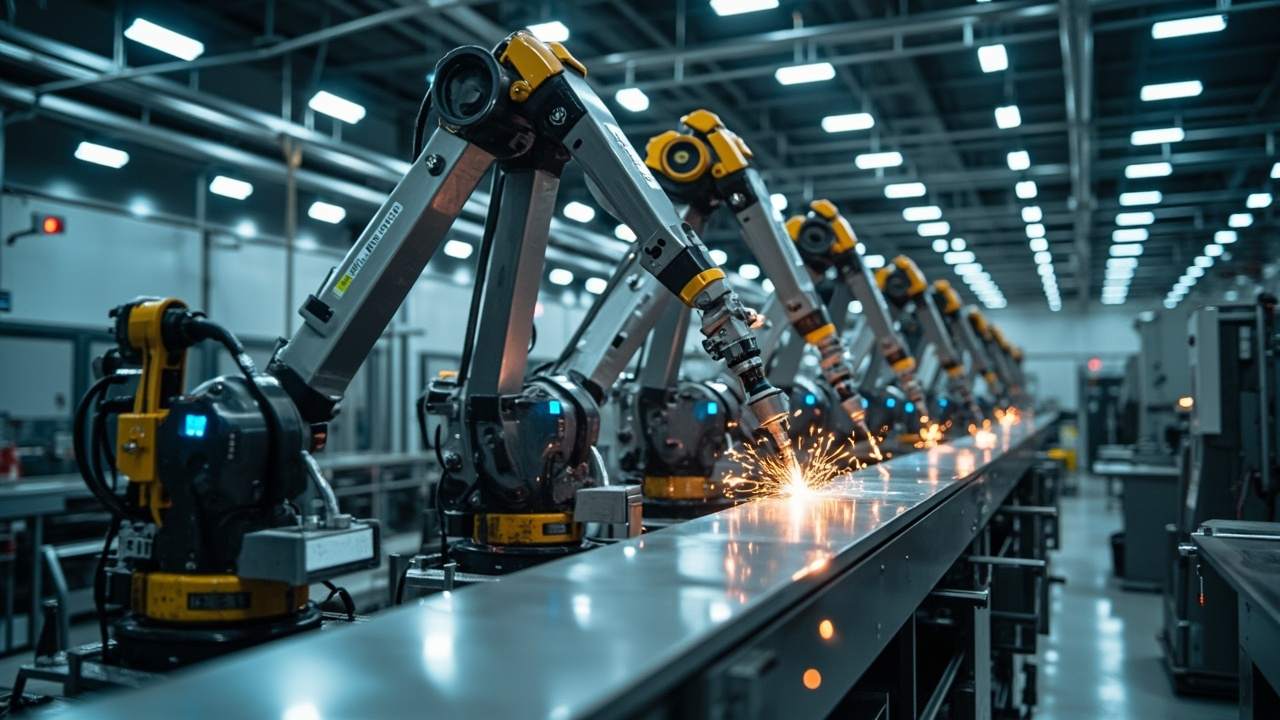
Best Practices for Implementing Industrial Automation in Manufacturing
Unlock efficiency and productivity with our guide to implementing industrial automation. Learn best practices for a successful transition.
Best Practices for Implementing Industrial Automation in Manufacturing
In today’s competitive manufacturing landscape, industrial automation is no longer a luxury but a necessity. Successfully integrating automation can significantly improve efficiency, reduce costs, and enhance overall productivity. However, a poorly planned implementation can lead to costly setbacks and disruptions. This guide outlines the best practices for implementing industrial automation, ensuring a smooth and effective transition.
As a trusted distributor and OEM representative for leading manufacturers like STEINEL, NOSHOK, DESCO, NORGREN, FASTEST, EATON, and SIEMENS, Valley International Supply understands the complexities of industrial automation. We leverage our technical expertise and personalized service to help you navigate the process successfully.
1. Define Clear Goals and Objectives
Before embarking on any automation project, it’s crucial to define clear, measurable, achievable, relevant, and time-bound (SMART) goals. What specific problems are you trying to solve? What improvements are you hoping to achieve?
- Identify Pain Points: Pinpoint areas in your manufacturing process that are inefficient, prone to errors, or labor-intensive.
- Set Measurable Targets: Define specific metrics for success, such as increased production volume, reduced defect rates, or lower operating costs.
- Align with Business Strategy: Ensure your automation goals align with your overall business objectives and long-term vision.
2. Conduct a Thorough Assessment
A comprehensive assessment of your existing infrastructure, processes, and workforce is essential for identifying the right automation solutions. This assessment should include:
- Process Mapping: Document your current workflows to understand the flow of materials, information, and resources.
- Technology Evaluation: Evaluate your existing equipment and systems to determine their compatibility with automation technologies.
- Skills Gap Analysis: Identify any skills gaps within your workforce and develop training programs to address them.
3. Choose the Right Automation Technologies
Selecting the appropriate automation technologies is critical for achieving your goals. Consider the following factors:
- Scalability: Choose solutions that can be easily scaled as your business grows.
- Flexibility: Opt for technologies that can be adapted to different tasks and processes.
- Integration: Ensure that the chosen technologies can seamlessly integrate with your existing systems.
- Cost-Effectiveness: Evaluate the total cost of ownership, including initial investment, maintenance, and operating expenses.
Common automation technologies include:
- Robotics: For repetitive tasks, material handling, and assembly.
- Programmable Logic Controllers (PLCs): For controlling and monitoring industrial processes.
- Human-Machine Interfaces (HMIs): For providing operators with real-time data and control over equipment.
- Sensors and Actuators: For collecting data and controlling physical processes.
- Machine Vision Systems: For inspection, quality control, and defect detection.
- Industrial Internet of Things (IIoT): For connecting devices and systems to enable data-driven decision-making.
4. Develop a Detailed Implementation Plan
A well-defined implementation plan is crucial for minimizing disruptions and ensuring a smooth transition. This plan should include:
- Project Timeline: Establish a realistic timeline with clear milestones and deadlines.
- Resource Allocation: Assign responsibilities and allocate resources, including personnel, equipment, and budget.
- Risk Management: Identify potential risks and develop mitigation strategies.
- Communication Plan: Establish clear communication channels to keep stakeholders informed throughout the project.
5. Prioritize Safety
Safety should be a top priority when implementing industrial automation. Ensure that all automated systems are designed and operated in accordance with safety standards and regulations. This includes:
- Risk Assessments: Conduct thorough risk assessments to identify potential hazards.
- Safety Guards and Interlocks: Install safety guards and interlocks to prevent accidental contact with moving parts.
- Emergency Stop Systems: Implement emergency stop systems that can quickly shut down equipment in case of an emergency.
- Training: Provide comprehensive safety training to all personnel who will be working with or around automated systems.
6. Invest in Training and Development
Successful automation requires a skilled workforce. Invest in training and development programs to equip your employees with the knowledge and skills they need to operate, maintain, and troubleshoot automated systems. This may include:
- Technical Training: Provide training on the operation and maintenance of specific automation technologies.
- Programming Training: Train employees on how to program and configure PLCs, HMIs, and other automation devices.
- Troubleshooting Training: Equip employees with the skills to diagnose and resolve common automation problems.
7. Start Small and Scale Gradually
Avoid trying to automate everything at once. Start with a pilot project in a specific area of your manufacturing facility and gradually scale up as you gain experience and confidence. This approach allows you to:
- Validate the Technology: Test the effectiveness of the chosen automation technologies in a real-world environment.
- Refine the Implementation Plan: Identify and address any unforeseen challenges before rolling out automation on a larger scale.
- Minimize Disruption: Reduce the risk of disrupting your entire manufacturing operation.
8. Monitor and Optimize Performance
Once your automation systems are up and running, it’s crucial to continuously monitor their performance and identify opportunities for optimization. This includes:
- Data Collection and Analysis: Collect data on key performance indicators (KPIs), such as production volume, defect rates, and downtime.
- Performance Monitoring: Use data analytics tools to identify trends and patterns in performance.
- Process Optimization: Continuously refine your automation processes to improve efficiency and reduce costs.
9. Partner with Experienced Automation Experts
Implementing industrial automation can be complex and challenging. Partnering with experienced automation experts can provide valuable guidance and support throughout the process. Valley International Supply offers a range of services to help you successfully implement automation, including:
- Consulting: We can help you assess your needs, develop a comprehensive automation plan, and select the right technologies.
- Engineering: Our team of experienced engineers can design and implement custom automation solutions tailored to your specific requirements.
- Integration: We can seamlessly integrate automation technologies with your existing systems.
- Training: We offer comprehensive training programs to equip your employees with the skills they need to operate and maintain automated systems.
- Support: We provide ongoing support to ensure that your automation systems are running smoothly and efficiently.
10. Embrace a Culture of Continuous Improvement
Industrial automation is not a one-time project but an ongoing process. Embrace a culture of continuous improvement by constantly seeking ways to optimize your automation systems and processes. This includes:
- Staying Up-to-Date: Keep abreast of the latest automation technologies and trends.
- Seeking Feedback: Solicit feedback from employees and other stakeholders on how to improve automation processes.
- Experimenting with New Technologies: Be willing to experiment with new technologies and approaches to automation.
Next Steps
Ready to take the next step in implementing industrial automation? Contact Valley International Supply today to discuss your specific needs and learn how we can help you achieve your automation goals. Our team of experts is ready to provide tailored engineering recommendations and dependable support.
FAQ
Q: What is the ROI of industrial automation? A: The ROI of industrial automation varies depending on the specific application and the extent of automation. However, common benefits include increased production volume, reduced labor costs, improved quality, and enhanced safety.
Q: How long does it take to implement industrial automation? A: The implementation timeline depends on the complexity of the project. Simple automation projects can be completed in a few weeks, while more complex projects may take several months.
Q: What are the common challenges of implementing industrial automation? A: Common challenges include selecting the right technologies, integrating automation systems with existing infrastructure, and training employees to operate and maintain automated systems.
Q: How can Valley International Supply help with industrial automation? A: Valley International Supply offers a range of services to help you successfully implement automation, including consulting, engineering, integration, training, and support. We represent leading manufacturers like STEINEL, NOSHOK, DESCO, NORGREN, FASTEST, EATON, and SIEMENS, providing access to high-quality automation solutions.
Manufacturers & sources referenced
This article references products from the following manufacturers. Learn more on their official sites:
About Valley International Supply
Valley International Supply is a distributor and OEM manufacturer representative of industrial automation equipment, serving manufacturers across the United States and Mexico for over 30 years. We supply PLCs, drives, HMIs, sensors, pneumatics, safety systems and connectivity components, backed by engineering selection assistance and technical support. Contact us at inquiry@valleyintlsupply.com or +1 (956) 338-0631.